What Is sUSDS?
- Getting Started
- 8 min read
- June 23, 2026

Key takeaways
- sUSDS is the yield-generating stablecoin of Sky Protocol, a value-accruing ERC-4626 token that represents your access to the Sky Savings Rate.
- sUSDS is not pegged to $1. Your token count stays the same while each token becomes redeemable for a growing amount of USDS as the Sky Savings Rate accrues.
- The yield comes from the Sky Savings Rate, a governance-set rate calibrated against Sky Protocol revenue. The Sky Agent Network is the primary source of that revenue.
- sUSDS is backed by USDS, which is itself backed by diversified, institutional-grade Protocol Collateral verifiable onchain at financial.skyeco.com.
- sUSDS is fully liquid: no lockups, no cooldown, redeemable for USDS at any time through Sky.money.
- sUSDS is the largest yield-generating stablecoin by issuance, and you access it by supplying USDS through Sky.money or swapping approved tokens into sUSDS.
sUSDS is the yield-generating stablecoin of Sky Protocol. You can get it by supplying USDS through Sky.money, by swapping directly from available stablecoins on Sky.money into sUSDS in a single transaction.
A stablecoin sitting in your wallet is doing one job: holding its value. sUSDS does that and accrues the Sky Savings Rate on top, with no lockups. The rest of this guide covers where that yield comes from, what backs it, and why sUSDS is a separate token from USDS.
sUSDS at a glance
USDS vs sUSDS: What’s the Difference?
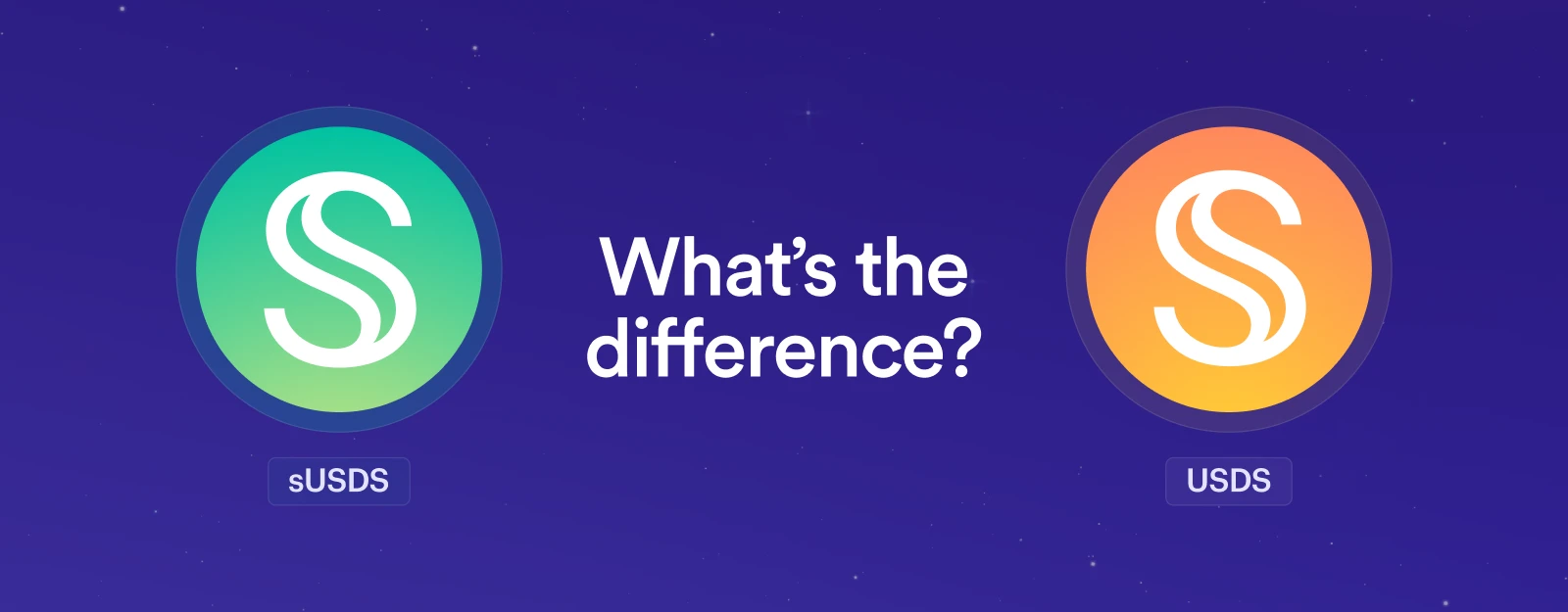
Short version: USDS is the stablecoin, sUSDS is the stablecoin at work.
USDS is a fully backed stablecoin that targets $1.00. It is the thing you hold, send, and use, and it is the entry point to everything else. On its own, USDS does not earn yield.
sUSDS is the yield-generating version. You supply USDS, you receive sUSDS, and from that point your position accrues the Sky Savings Rate. Most people who want their stablecoins to do something hold sUSDS rather than leaving idle USDS in a wallet.
What Is sUSDS in Simple Terms?
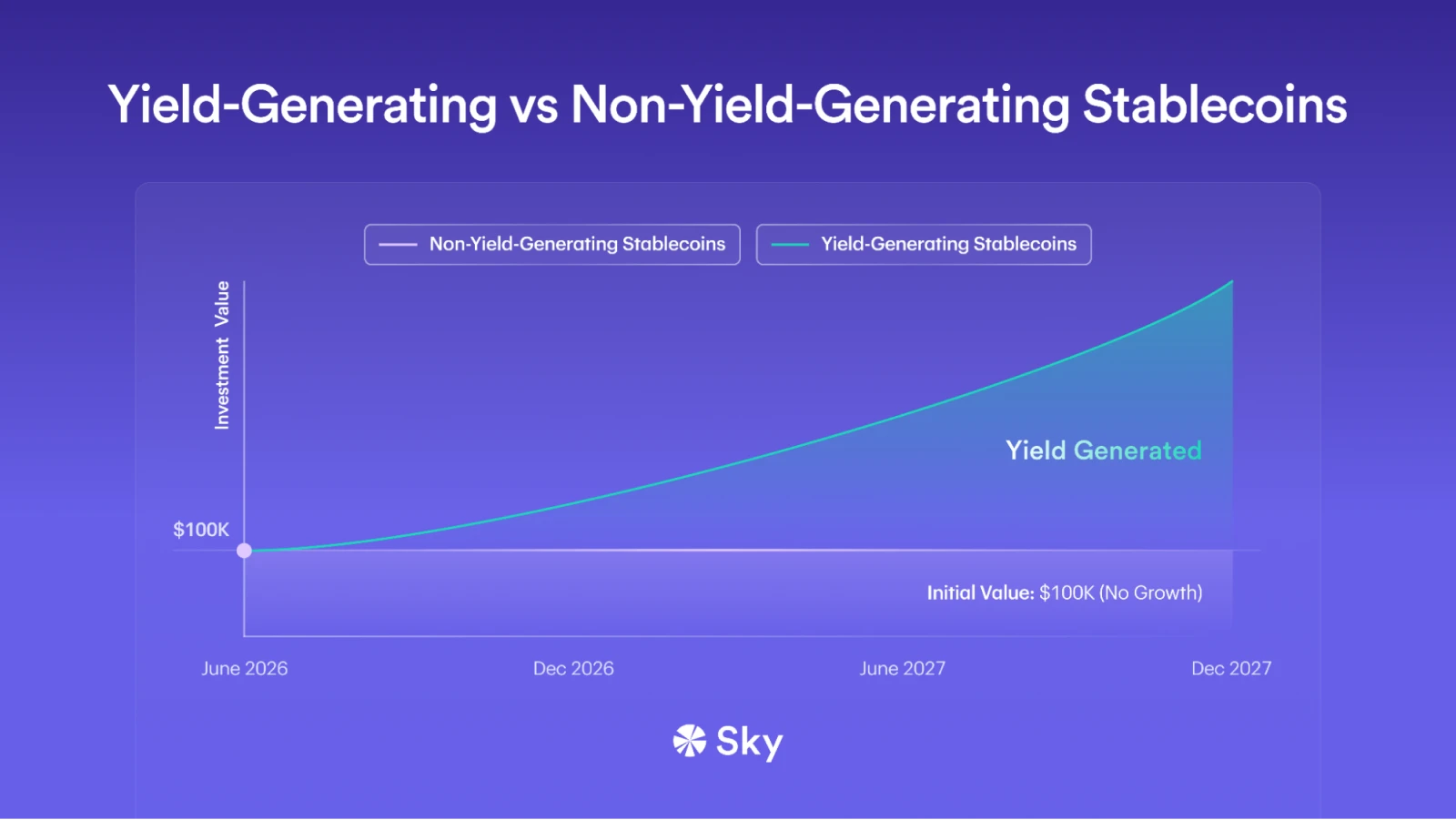
sUSDS is different to normal stablecoins it's not pegged to $1. Instead, one sUSDS is always redeemable for a growing amount of USDS, because every sUSDS you hold accrues the Sky Savings Rate automatically. The amount of sUSDS tokens in your wallet stays the same; what grows is what each token can be exchanged for in USDS.
Under the hood, sUSDS is an ERC-4626 token, a common standard for yield-generating vault tokens. You don't need to know what that means to use it. sUSDS is the flagship savings token on Sky.money and, by issuance, the largest yield-generating stablecoin in the market.
How Does sUSDS Work?
sUSDS works in three steps: get in, hold, and exit when you choose.
Step one: get sUSDS
You can enter sUSDS directly by swapping approved stablecoins into sUSDS on Sky.money. When you convert USDS into the savings module the sUSDS you receive becomes the onchain record of your position in the Sky Savings Rate.
If you are starting from USDC, the entry runs through the Peg Stability Module (PSM): a smart contract that swaps USDC to USDS one-to-one, with zero slippage and no protocol fees, in either direction. The PSM holds roughly $4B in institutional-grade liquidity, which means large positions move without price impact.
Step two: how your sUSDS grows
The number of sUSDS tokens in your wallet doesn't change over time. Instead, each sUSDS becomes redeemable for a little more USDS as the Sky Savings Rate accrues. The token is value-accruing rather than rebasing.
Step three: exiting sUSDS
Whenever you want to exit, you redeem your sUSDS and receive more USDS than you originally supplied, because each sUSDS has grown in redemption value while you held it. You can also redeem other stablecoins on Sky.money like USDC or USDT. There's no cooldown, no unbonding period. Your position stays fully liquid from the moment you enter.
Where Does the sUSDS Yield Come From?
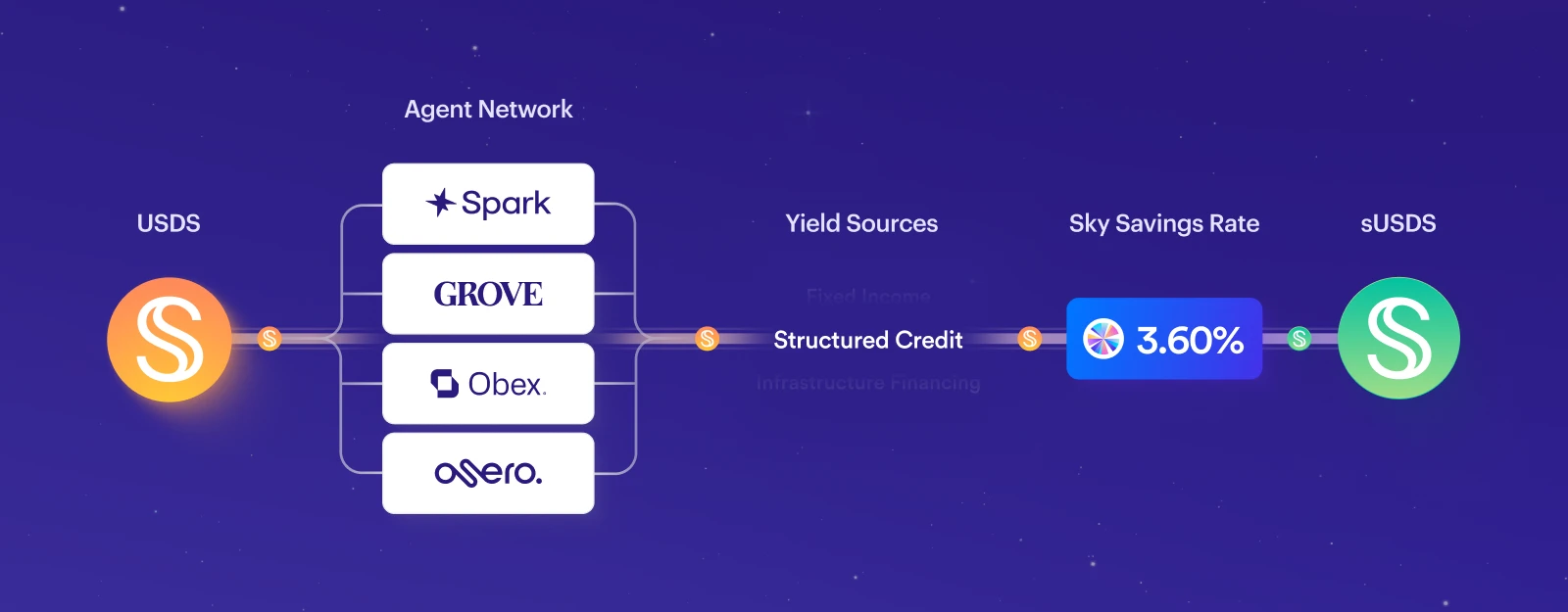
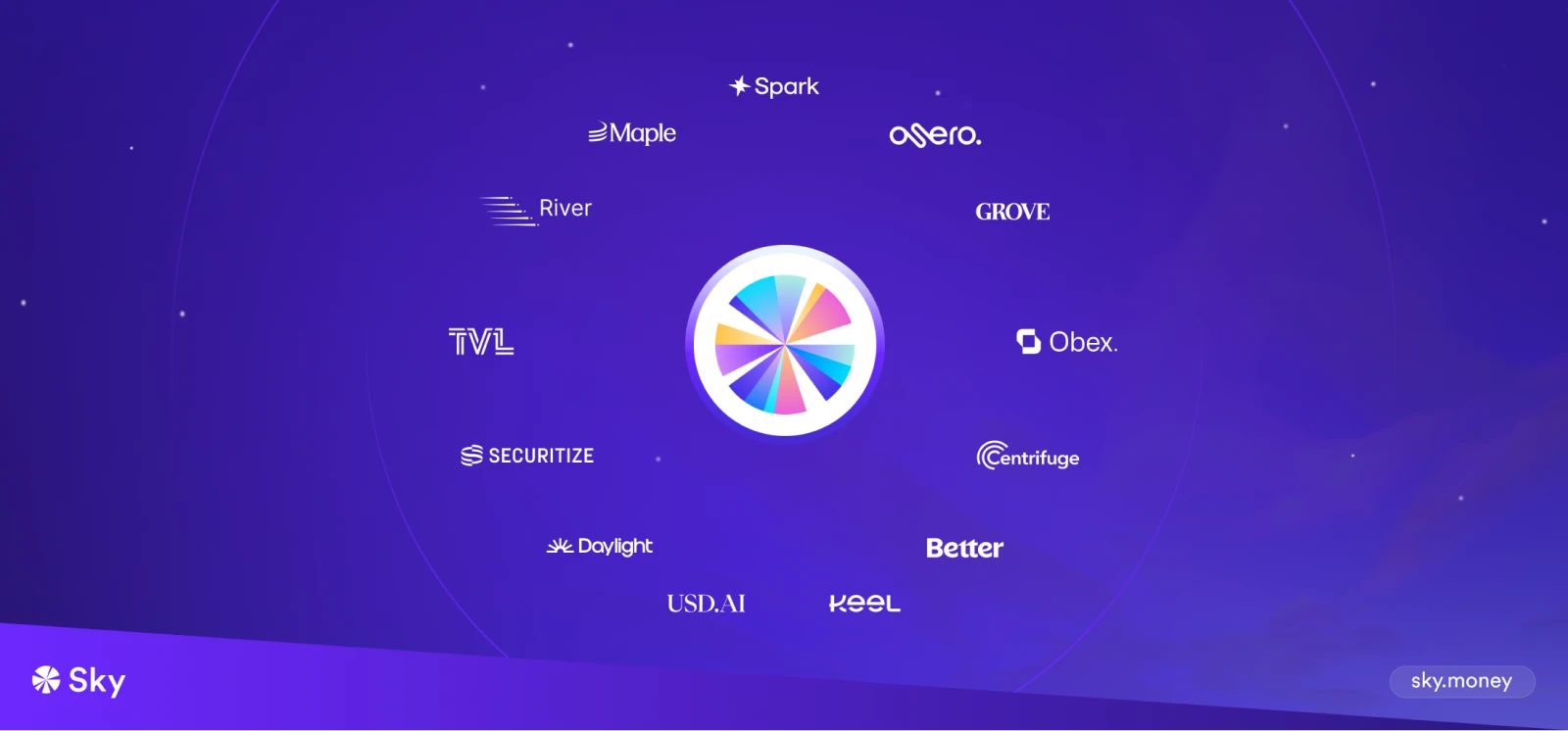
sUSDS accrues the Sky Savings Rate, a governance-set rate calibrated against Sky Protocol revenue. Sky Protocol makes USDS liquidity available to the Sky Agent Network, an independent set of capital allocators. Those allocators deploy that liquidity across diversified strategies
The returns from that activity flow back into the protocol as revenue, and Sky Governance calibrates the Sky Savings Rate against that revenue base.
One distinction matters more than any other. As an sUSDS holder, you're not a claimant on any single agent, strategy, or collateral pool. The rate is the output of a diversified system, which is exactly why it doesn't rise and fall with the performance of the agents.
Why the rate is governance-set, not market-driven
A lot of onchain yield is market-clearing, which is a polite way of saying it spikes when demand is hot and collapses when it is not. The Sky Savings Rate works differently. Because it is governance-set and drawn from diversified protocol revenue, it is built for predictability rather than for chasing a number.
What Backs sUSDS, and Is It Safe?
sUSDS is backed by USDS, which is itself backed by diversified, institutional-grade Protocol Collateral held in Sky Protocol. The protocol has operated for almost a decade with zero core exploits. That collateral backing is verifiable at Finance Dashboard.
The collateral behind it
Every USDS in circulation is backed by more than a dollar of Protocol Collateral, spread across a diversified mix rather than concentrated in one place. Because sUSDS is redeemable for USDS, that collateral structure is what ultimately stands behind your position. The full composition is published and auditable onchain at financial.skyeco.com
A track record you can verify
Almost a decade of continuous operation with zero core exploits is rare in this space. That record covers Black Thursday in 2020, the UST collapse, FTX, and SVB.
The risks worth understanding
No onchain product is risk-free. The honest risks with sUSDS are the same as with any mature protocol. Besides those, Sky Protocol products accessible through Sky.money have varying availability by region, so access may be restricted where you are.
Common questions
Is sUSDS a stablecoin?
How does sUSDS generate yield?
Is sUSDS safe, and what are the risks?
What is the current sUSDS yield?
Does sUSDS have lockups or fees?
What is the difference between USDS and sUSDS?
Where can I get sUSDS?
About this blog
The Sky.money blog will cover how Sky Protocol mechanics are made available through the Sky.money interface, how Sky Governance votes shape the protocol's risk posture, why broadening Sky Protocol's reach through integration partners matters for the rate you earn, and what all of that means for your own stablecoin strategy.